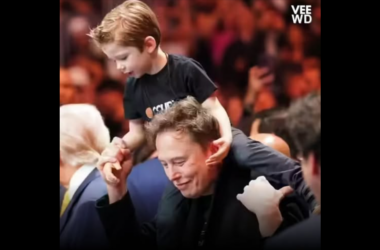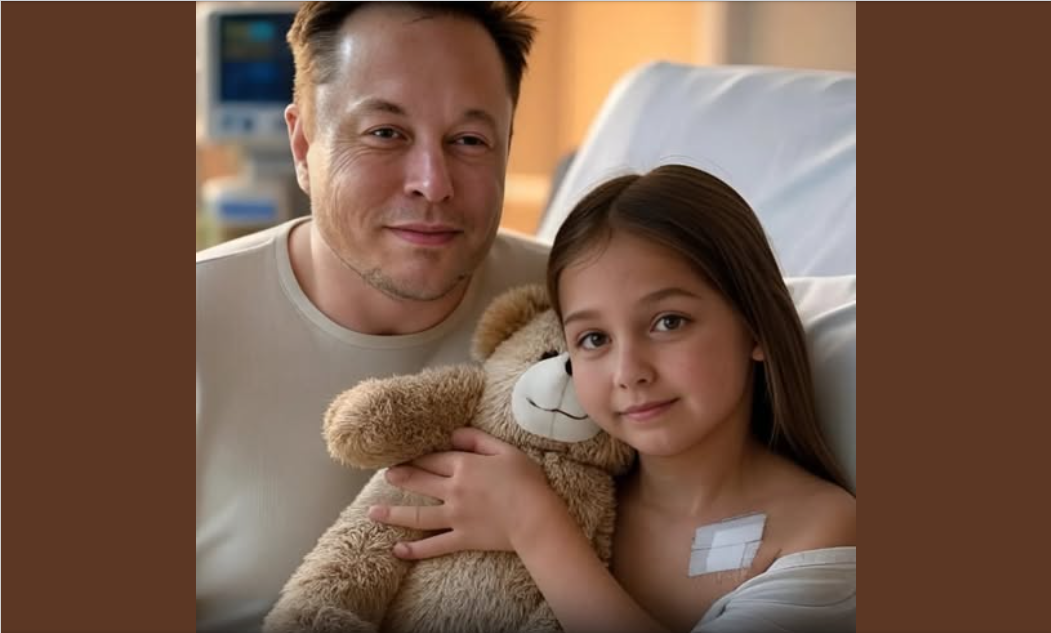
Her condition was rare and severe. Traditional treatments had reached their limit, and a full heart transplant—dependent on the availability of a compatible donor—remained uncertain. Doctors suggested an artificial heart as a bridge to survival, a complex and extraordinarily expensive procedure that most families could never afford.
For her parents, the hope of saving their daughter’s life clashed painfully with financial reality.
That was when an unexpected intervention changed everything.
According to sources familiar with the situation, the case was brought to Musk’s attention through a medical foundation that supports children with critical heart conditions. What happened next did not involve press conferences or social media announcements. Instead, Musk reportedly asked a simple question: “What does she need to live a normal life?”
Within days, funding was approved to cover the full cost of the artificial heart implant, post-operative care, and long-term rehabilitation. No conditions. No branding. No public acknowledgment requested.
The surgery itself was nothing short of extraordinary. A team of leading pediatric cardiac surgeons worked for hours, carefully implanting the artificial heart designed to support her small body. The procedure carried risks, but it also carried hope—the kind that medical professionals rarely allow themselves to feel too strongly.
When the surgery was over, doctors held their breath.
Then the monitors stabilized.
Her new heart—powered by cutting-edge biomedical technology—began to work exactly as intended.
For the first time in years, her body received the oxygen it needed without struggle. Her skin regained color. Her breathing eased. Nurses described the moment her eyes opened after surgery as “something we’ll never forget.”
Recovery was slow but miraculous. Day by day, she regained strength. Tubes were removed. Steps were taken. Smiles returned. Within weeks, doctors noticed something just as remarkable as the medical success: her personality blossomed. The quiet, cautious child who once measured every movement out of fear began to laugh freely again.
Her parents say the moment that truly broke them emotionally came months later—not in the hospital, but outside.
It was the first time their daughter ran.
Not far. Not fast. Just a few joyful steps across a park.
But to them, it felt like watching a miracle in motion.
For Musk, those close to him say this act reflected a deeply personal belief: that technology should ultimately serve humanity at its most vulnerable moments. While his public persona is often associated with ambition and relentless drive, this private decision revealed another side—one grounded in the idea that innovation means nothing if it cannot reduce suffering.
Medical professionals involved in the case echoed that sentiment. “This wasn’t just about money,” one doctor explained. “It was about timing. The speed of the decision mattered. It gave us the chance to act before it was too late.”
The artificial heart will likely serve as a long-term solution or a bridge until a donor heart becomes available. Either way, her prognosis has improved dramatically. She is now attending school regularly, playing with friends, and doing things her parents once feared she might never experience—like planning her birthday party.
When asked what she wants to be when she grows up, the girl reportedly answered without hesitation: “A doctor. So I can help kids like me.”
As news of the story spread, public reaction was swift and emotional. Social media users described the act as “a reminder of what wealth can do when it’s used with empathy.” Others pointed out that while Musk’s companies aim to change the future of humanity, this single decision changed one child’s entire universe.
What makes the story resonate so deeply is not just the scale of the donation, but the contrast. In an era often defined by division, outrage, and spectacle, this was a moment of quiet humanity. No debate. No algorithms. Just a life saved.
Musk himself offered no elaborate statement. According to those familiar with his response, he simply said that no child should lose their future because of a lack of resources—and that if technology exists to help, then it should be used.
For one 8-year-old girl, that belief meant waking up with a new heart and the chance to grow up.